
Transforming In-Hospital Stroke Detection
Real-Time Brain Monitoring for Earlier Recognition of Stroke
For patients undergoing hospital procedures, NeuroSentry is developing real-time brain monitoring technology designed to help clinicians recognize concerning changes in brain activity that may be associated with stroke.
There is currently no widely adopted solution for continuous in-hospital stroke monitoring
3–4%
chance of stroke during or after cardiac procedures
5x
higher mortality with undetected perioperative strokes
92%
of patients with perioperative stroke do not receive stroke treatment
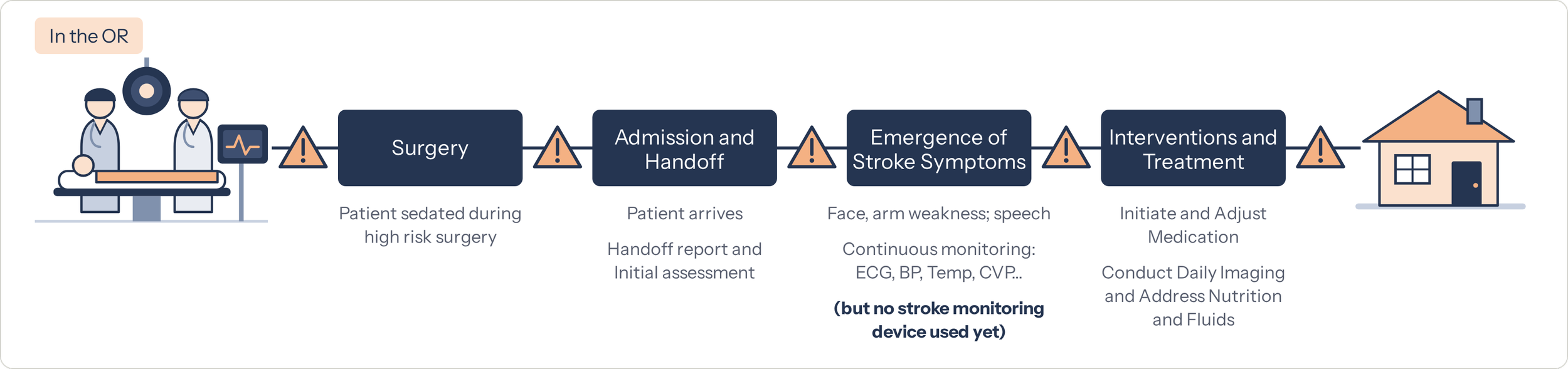
Perioperative stroke can remain unrecognized for hours or even days
Stroke Occurs: Not Recognized
Delayed Recognition: Delayed Opportunity for Evaluation and Treatment

Stroke Occurs: Recognized

Early Recognition: Earlier Opportunity for Evaluation and Timely Treatment.
Introducing COIN
Recognizing the clinical gap in stroke recognition, Dr. Mauro Caffarelli invented the Correlate Of Injury to the Nervous System (COIN) index to help non-expert clinicians use EEG to recognize changes in brain activity that may be associated with stroke in real time.
Supporting real-time recognition of concerning stroke-like EEG changes with minimal EEG interpretation experience.
Supporting clinical assessment of neurological changes as early as possible during and after high-risk procedures.
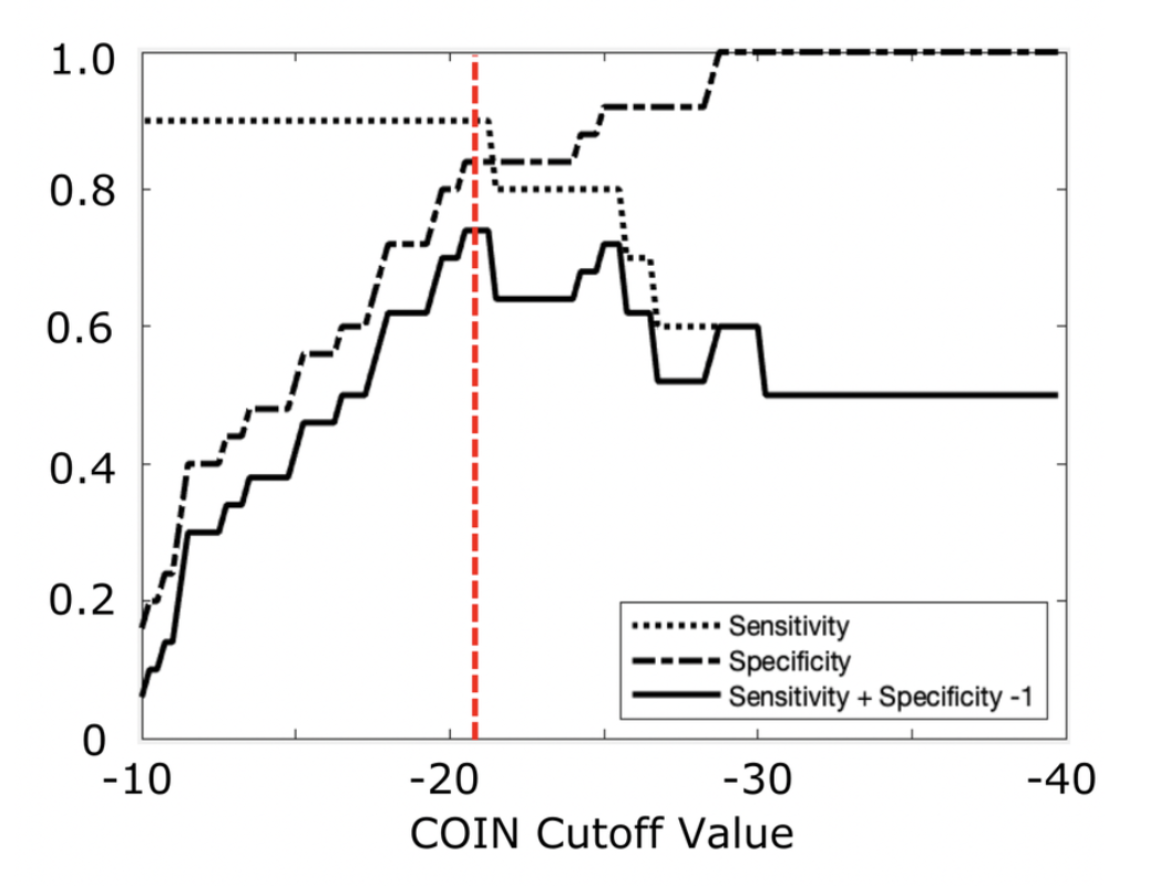
COIN leverages a traditional approach to clinical diagnostics using a threshold-based approach where the clinician can configure the sensitivity and specificity threshold based on their needs and the monitoring context.
Learn more about COIN. Learn more about the use cases of COIN.